Finished driveways are easy to judge by eye. Most homeowners look at a new one the way they’d look at a fresh coat of paint. Is it clean? Is it even? Is it the right color?
But a truly finished driveway is doing a lot more work than what your eye can catch on a walkthrough. Understanding what “finished” really means and what corners get cut when it isn’t, can save you from a driveway that looks fine in month one and starts causing problems by year two.
What “Finished” Actually Means on a Concrete Driveway
A finished driveway isn’t just a smooth slab. It’s the combination of:
- A consistent, intended texture
- Clean edges
- Transitions that actually work with your property (where the driveway meets the garage, road, and walkway)
According to National Ready Mixed Concrete Association (NRMCA) guidance on finishing concrete, getting that surface quality right depends on timing the work correctly relative to the concrete’s own curing process, not just how it looks once it’s troweled.
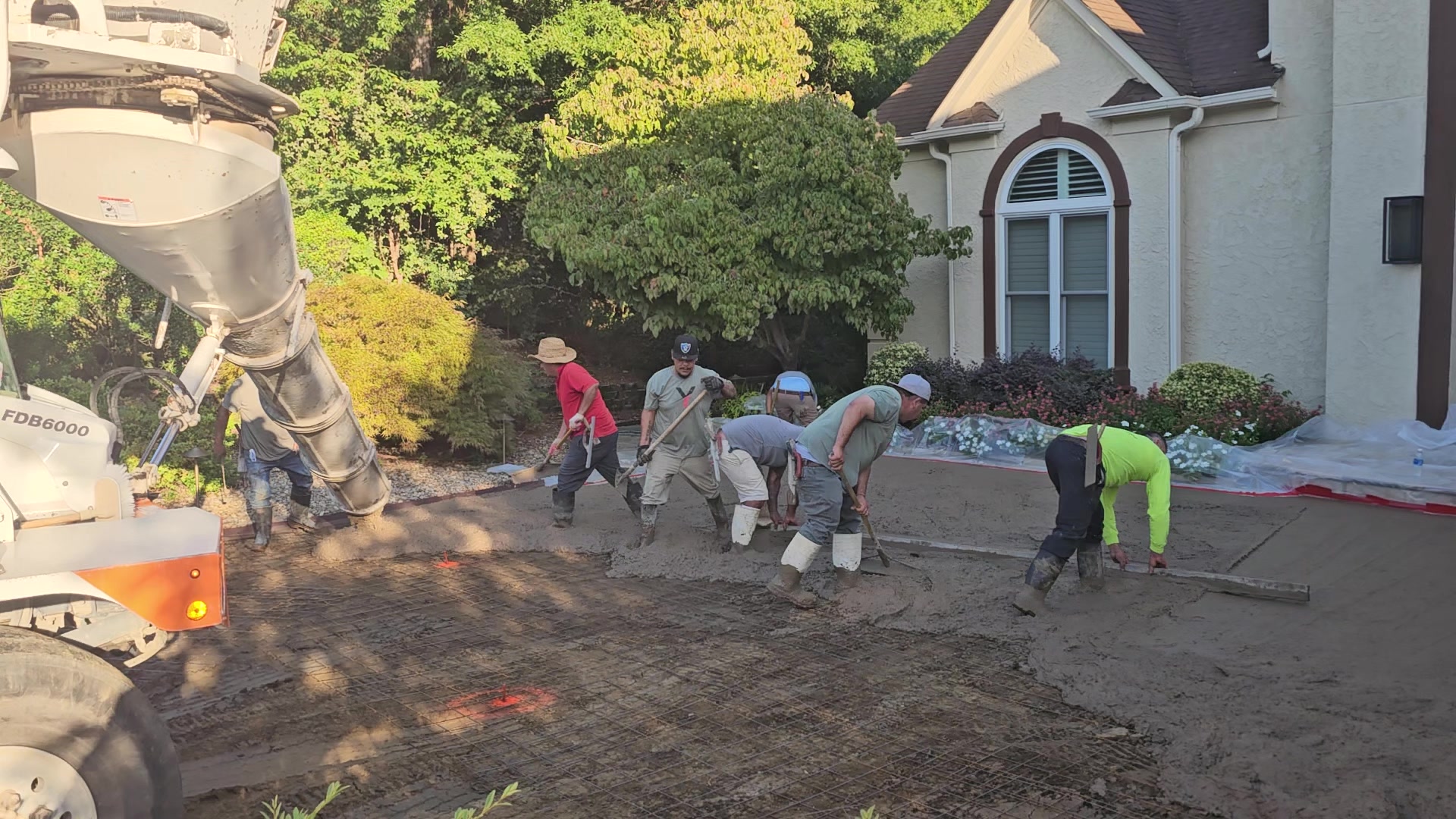
None of that surface work matters, though, if what’s underneath isn’t right. Dependable base support and proper grading for drainage have to be in place before the concrete is ever poured. Joint placement and curing time matter just as much as the visible finish, even though most homeowners never think to ask about them.
The Finishing Mistakes You’ll Never See Happen
Most of the mistakes that shorten a driveway’s lifespan happen before you’d ever notice them.
Finishing the surface while bleed water is still present, adding extra water or dry cement to make the surface easier to work, and skipping proper curing time can all leave you with a weak wearing surface, per NRMCA guidance on weak and dusty surfaces. None of that shows up on installation day. It shows up a year or two later.
Poorly planned joints cause similar delayed problems. Joints aren’t just decorative lines, they’re placed to control where concrete is allowed to crack as it naturally shrinks and shifts over time. Skip that planning, and you often end up with cracks in places they shouldn’t be.
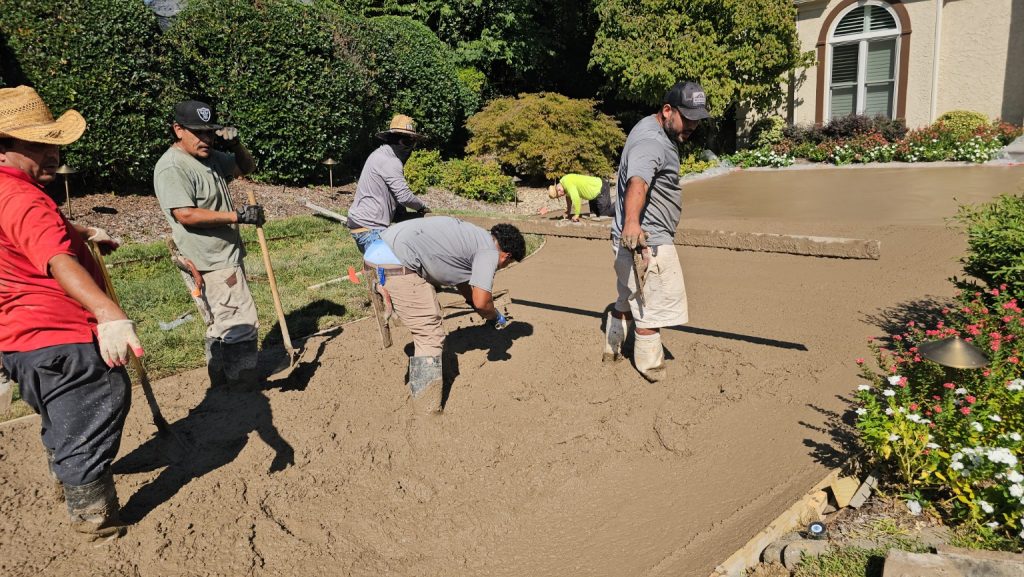
Here’s how those early shortcuts tend to show up down the road:
- Weak or skipped curing → surface turns dusty or wears down faster than it should
- Poor joint planning → random, unplanned cracking
- Incorrect grading → standing water that never fully drains
One thing worth knowing: a crack by itself doesn’t automatically mean the work was done poorly. Its location, how it behaves over time, and whether it affects how you actually use the driveway all matter for that judgment call.
What to Ask Before You Sign And Red Flags to Watch For
Before any concrete gets poured, ask for a written scope that spells out:
- The area being worked and site preparation
- Slab thickness, concrete mix, and any reinforcement
- The finish, jointing plan, and curing process
- Who’s handling drainage work and whether a sealer is included
- Price, payment stages, and how changes to the scope get handled
- Cleanup and who’s responsible for permits or approvals
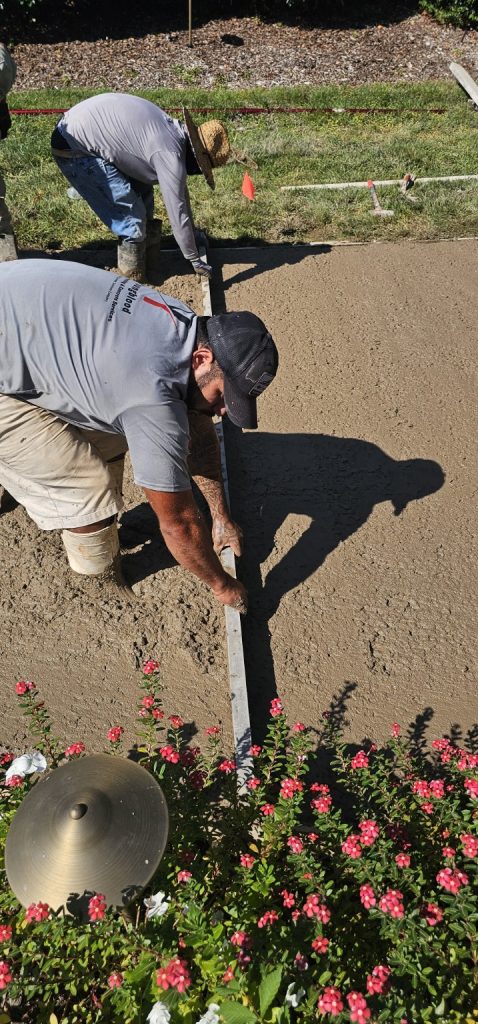
Photos or a physical sample can help make sure you and your contractor are picturing the same finished result.
A few red flags to watch for along the way: a vague, one-line price with no breakdown; pressure to sign immediately; or a contractor who can’t clearly explain what site preparation is actually included. Be cautious of anyone who promises a driveway that will “never crack”, that’s not a realistic guarantee in concrete work. Compare your written scope against other quotes, and ask to see completed finished driveways similar to your own.
Why Charlotte, Lake Norman, and Upstate SC Weather Changes the Finish
Local weather and site conditions directly affect how a driveway should be finished. Heat, wind, and low humidity — common across a Charlotte summer — can dry the surface too quickly and raise the risk of early cracking, per NRMCA guidance on early surface cracking. Cooler conditions, on the other hand, slow down how fast the concrete builds strength. A contractor familiar with the region will plan surface protection and curing around your site’s actual conditions, including exposed versus shaded areas.
Permits and approvals vary too, depending on your property’s jurisdiction, road owner, and whether your neighborhood has an HOA review process. This matters especially if the project changes your driveway entrance, touches the public right-of-way, or affects drainage. In South Carolina, for example, SCDOT runs an encroachment-permit process for work within its maintained right-of-way.
Who actually pulls the permit depends on the scope: if your concrete work is part of a larger building project, you’ll typically handle the building permit yourself. If the contractor is managing the project start to finish, structure and concrete both, they’ll usually take care of it.
Youngblood’s Process, From Consultation to Final Walkthrough
Every project starts with understanding what you actually need your site conditions, your goals, and which finish fits both. From there, an estimate is prepared, and once approved, the work moves through the agreed preparation, our driveway services covering concrete placement and finish, jointing, curing, and cleanup.
A final walkthrough with you comes at the end of every project. Care instructions are explained in person, and any questions get answered on the spot, not left for you to figure out later.
A Real Driveway Transformation in South Charlotte
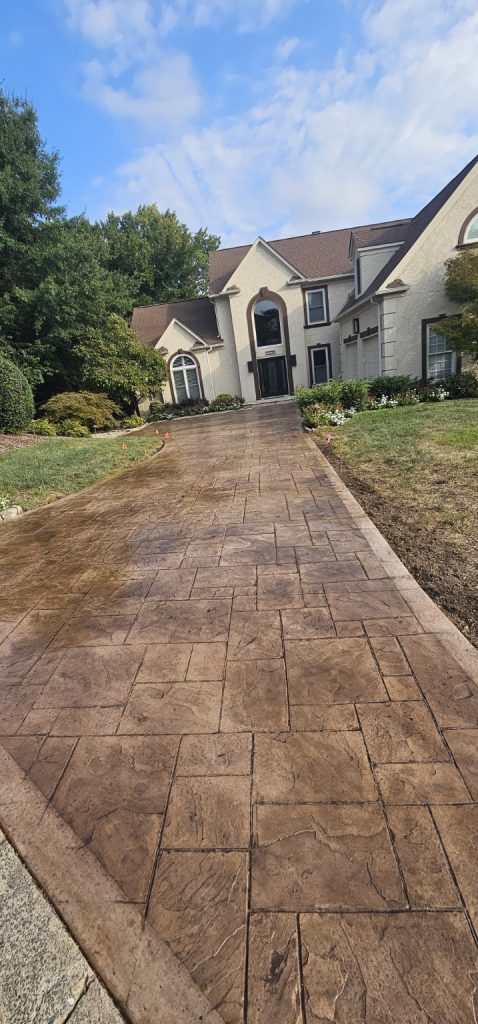
One recent project involved a 30-year-old driveway in a high-end South Charlotte neighborhood. It had been color-sealed multiple times over the years, and the coating had started peeling no longer matching the standard the neighborhood expected.
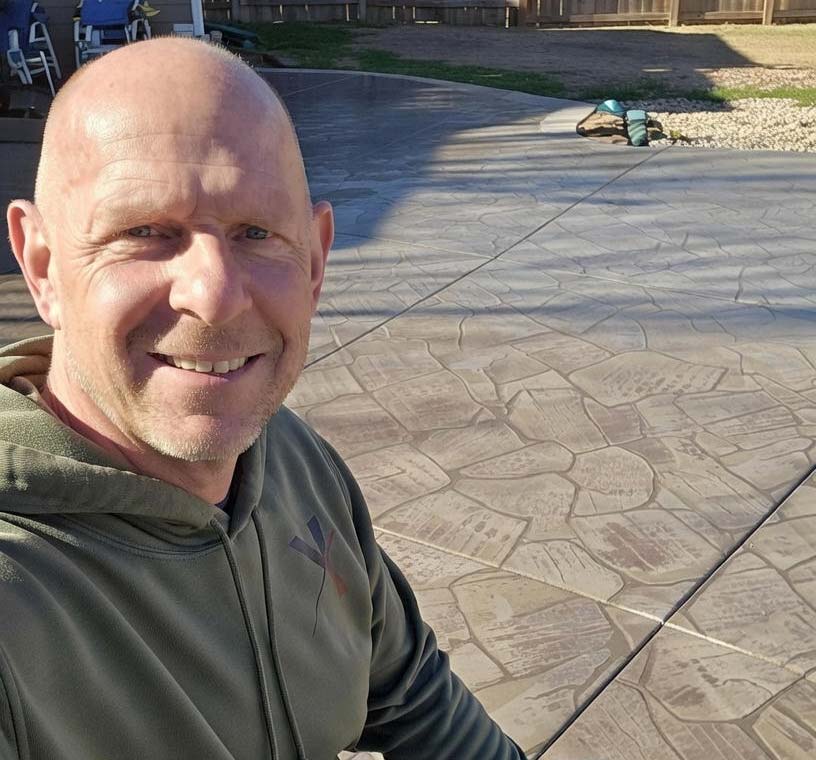
After walking through finish and color options together, the homeowners chose a decorative stamped concrete replacement. The project meant removing the old driveway, preparing the base correctly, restoring the existing flagstone border, and installing and sealing the new stamped surface.
The finished design, in warm brown tones, ties in beautifully with the home and existing stonework and the homeowners have been thrilled with the result ever since.
Get a Written Scope Before Any Concrete Gets Poured
“Before you sign, ask your contractor to explain the preparation, the finish, and how you will care for it. You should know what you are buying and what to expect after the crew leaves.” — Tracy Barnett, Youngblood Waterproofing and Concrete Services
If you’re planning a new driveway in Charlotte, Lake Norman, or Upstate South Carolina, don’t sign anything until you have that scope in writing. Reach out to Youngblood to talk through your project and get a clear plan before any concrete is poured. Once it’s done, keep it looking good for years to come with a few simple maintenance habits.