Balconies take more weather abuse than almost any other part of a house. Rain, sun, freeze-thaw cycles, and daily foot traffic all hit the same horizontal surface year after year. When the waterproofing underneath fails, the damage happens where you can’t see it, often for months before any warning sign shows up on the surface.
Youngblood Waterproofing and Concrete Services inspects and repairs balconies across the Charlotte region every week, and the same pattern shows up again and again: a balcony looks fine on top while the plywood underneath is quietly rotting away. This guide breaks down why that happens, what to watch for and what a proper waterproofing repair actually involves.
Why Balconies Are So Vulnerable to Water Intrusion
A balcony is a horizontal surface exposed to the elements 100% of the time. Unlike a roof, which is designed with steep pitches to shed water quickly, many balconies are built with little to no slope. Water sits instead of draining, and standing water is one of the fastest ways to break down a waterproofing system.
According to building envelope research cited by Valordek, water infiltration is responsible for more than 75% of all building envelope warranty claims in coastal climates. The financial impact adds up quickly too. Restoration industry estimates put the cost of remediating water damage from a single failed balcony between $3,000 and $10,000 per affected unit, and that figure only covers the damage left behind by the leak, not the waterproofing repair itself.
The Most Common Culprits
Youngblood Waterproofing and Concrete Services sees a few recurring issues on almost every balcony repair call:
- Little or no slope, which allows water to pool instead of draining off the deck
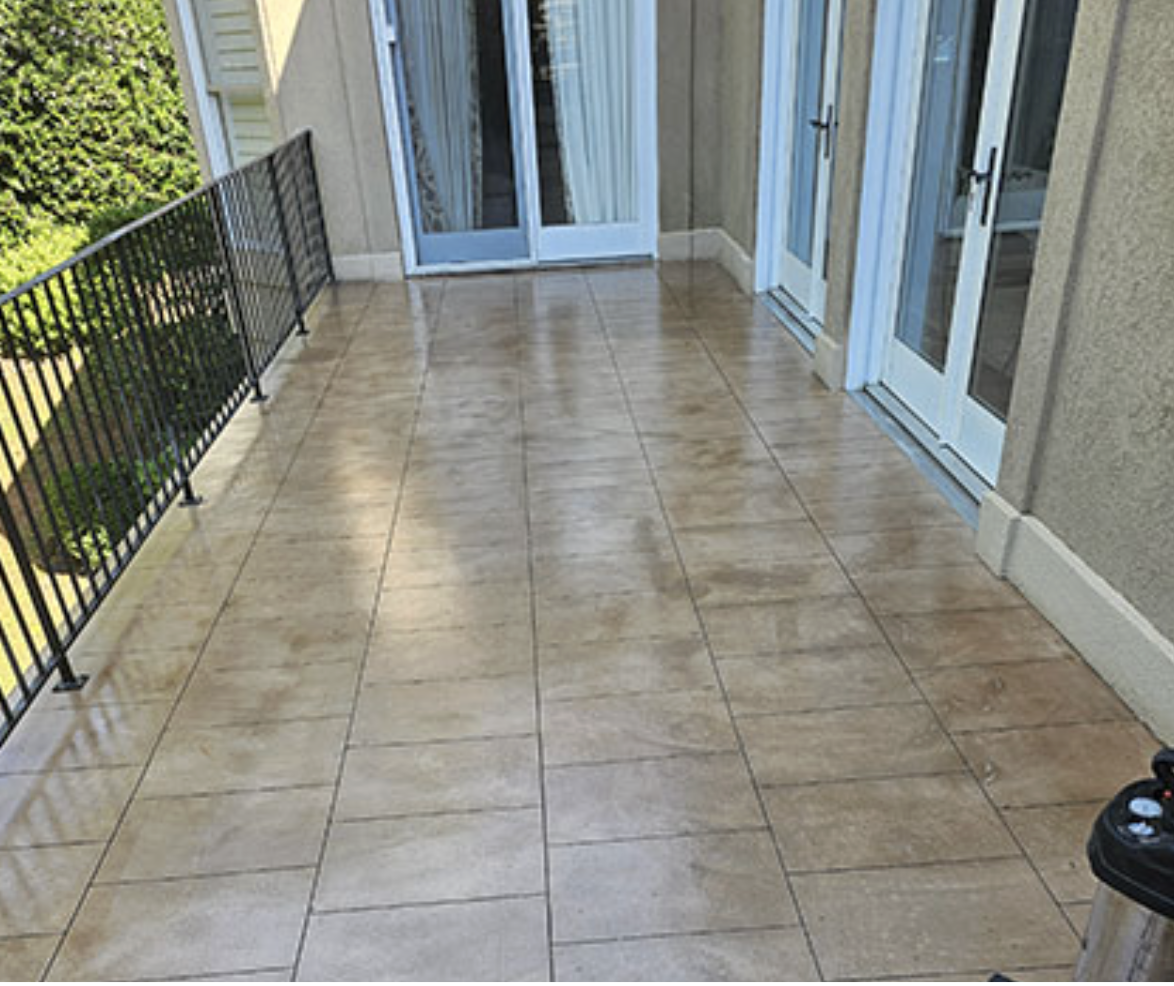
- Deteriorating top surfaces, whether that’s stamped concrete, tile, or natural stone
- Damaged plywood substrate hiding underneath the surface layer
Almost every time the damaged top covering comes off, the plywood underneath is already rotting. The surface material can look completely intact right up until it fails.
Warning Signs Homeowners Should Never Ignore
Water damage on a balcony rarely announces itself with a dramatic collapse. It shows up in small, easy-to-miss details first. Homeowners should watch for:
- Standing water that doesn’t move off the deck after rain, even hours later
- Stains on the ceiling underneath the balcony, which usually mean water has already made it through the structure
- Brittle or cracking concrete, tile, or stone on the balcony surface
Any one of these signs is worth a professional look. Together, they usually mean water has already reached the plywood substrate below.
What Gets Damaged When Water Gets In
Once water penetrates a balcony surface, it doesn’t stop at the top layer. It moves downward and outward, affecting:
- The wood substructure and plywood decking
- Structural joists supporting the balcony
- Ceilings in the room directly below
- The top coating itself, whether that’s travertine, concrete, or tile
This is why a balcony that looks like a simple surface repair often turns into a much bigger project once the demolition starts. The damage underneath is usually worse than what’s visible from the top.
What a Proper Waterproofing System Involves
Youngblood Waterproofing and Concrete Services uses a tier 1 waterproofing system built around a four step process. The goal is a repair that protects the balcony for years, not a patch that needs to be redone every season.
A typical waterproofing project includes:
| Component | Purpose |
| New plywood | Replaces rotted or compromised substrate with a solid, dry base |
| Aluminum flashing | Directs water away from vulnerable edges and transitions |
| Waterproofing self leveling membrane | Creates a continuous water barrier across the entire deck surface |
| Protective top coat | Shields the membrane and restores a finished, walkable surface |
This system addresses the horizontal surfaces most prone to water problems, along with the framing and coverings connected to them.
Mistakes That Make Water Intrusion Worse
Some of the most common balcony problems Youngblood Waterproofing and Concrete Services encounters come from well-intentioned but incomplete fixes. Two mistakes show up more than any others:
Relying on Caulk or Sealer Alone
Caulking or sealing the top layer might look like a fix, but these products fail quickly under constant sun and rain exposure. A short-term fix like this often prolongs the underlying issue and can create new problems by trapping moisture instead of removing it.
Using Indoor Products Outdoors
Products designed for indoor use, like Red Guard, are sometimes applied to exterior balconies. These products aren’t built to handle direct weather exposure and tend to fail far sooner than an outdoor-rated waterproofing system.
How Often Should Balconies Be Inspected?
Balconies should be inspected at minimum once a year. Water damage can progress quickly once one component of the system fails, so an annual check gives homeowners a chance to catch problems before they spread to the structure below.
Certain seasons bring more service calls than others. Spring and fall tend to see the highest volume of waterproofing repair requests, likely tied to seasonal temperature swings and precipitation patterns.
The Long-Term Value of Doing It Right the First Time
The biggest benefit of proper waterproofing is the long-term life of the structure. A correctly installed system means homeowners aren’t stuck remedying the same water damage every couple of years. Waterproofing protects the substructure and mitigates water properly, which directly extends the lifespan of the entire balcony.
Doing the job once, with the right materials and the right process, removes the need to worry about these repairs down the road.
Why Do Homeowners Choose Youngblood Waterproofing and Concrete Services?
Balcony repair isn’t a single-trade job. Most projects require a waterproofing team, a framing team, and a concrete team working together. Youngblood Waterproofing and Concrete Services keeps all three skill sets in house, which means the team can recognize an issue and carry out the full solution without bouncing the project between separate contractors.
The company works with both residential and commercial properties, with most projects centered on homes, and serves a 100 mile radius around Charlotte. If standing water, ceiling stains, or brittle concrete have shown up on your balcony, reach out for an inspection before the damage spreads any further. A one-time waterproofing repair now can save years of recurring, costly fixes later.
Schedule a balcony inspection today and get a clear, honest assessment of what’s happening beneath the surface. Contact the Youngblood Waterproofing and Concrete Services team to book your inspection and protect your home before minor damage turns into a major repair.
Frequently Asked Questions
How do I know if my balcony has a waterproofing problem?
Look for standing water that doesn’t drain off the deck after rain, stains on the ceiling underneath the balcony, and concrete, tile, or stone that feels brittle or is starting to crack. Any of these signs is worth a professional inspection.
How often should a balcony be inspected?
At minimum, once a year. Water damage can progress quickly once a single component fails, so an annual inspection gives homeowners a chance to catch problems early, before they reach the structure below.
Will caulking or sealing my balcony fix the problem?
No. Caulk and sealer applied to the top layer only address the surface. These products fail quickly under constant sun and rain exposure, and relying on them often prolongs the underlying issue instead of solving it.
What does a proper balcony waterproofing repair include?
A typical project includes new plywood to replace any rotted substrate, aluminum flashing to direct water away from vulnerable edges, a self leveling waterproofing membrane, and a protective top coat to finish the surface.
Does waterproofing actually extend the life of a balcony?
Yes. Waterproofing protects the substructure and mitigates water properly, which directly extends how long the balcony lasts and reduces the chance of repeat repairs down the road.